Wild rice and smoked chicken salad

IMG_0452

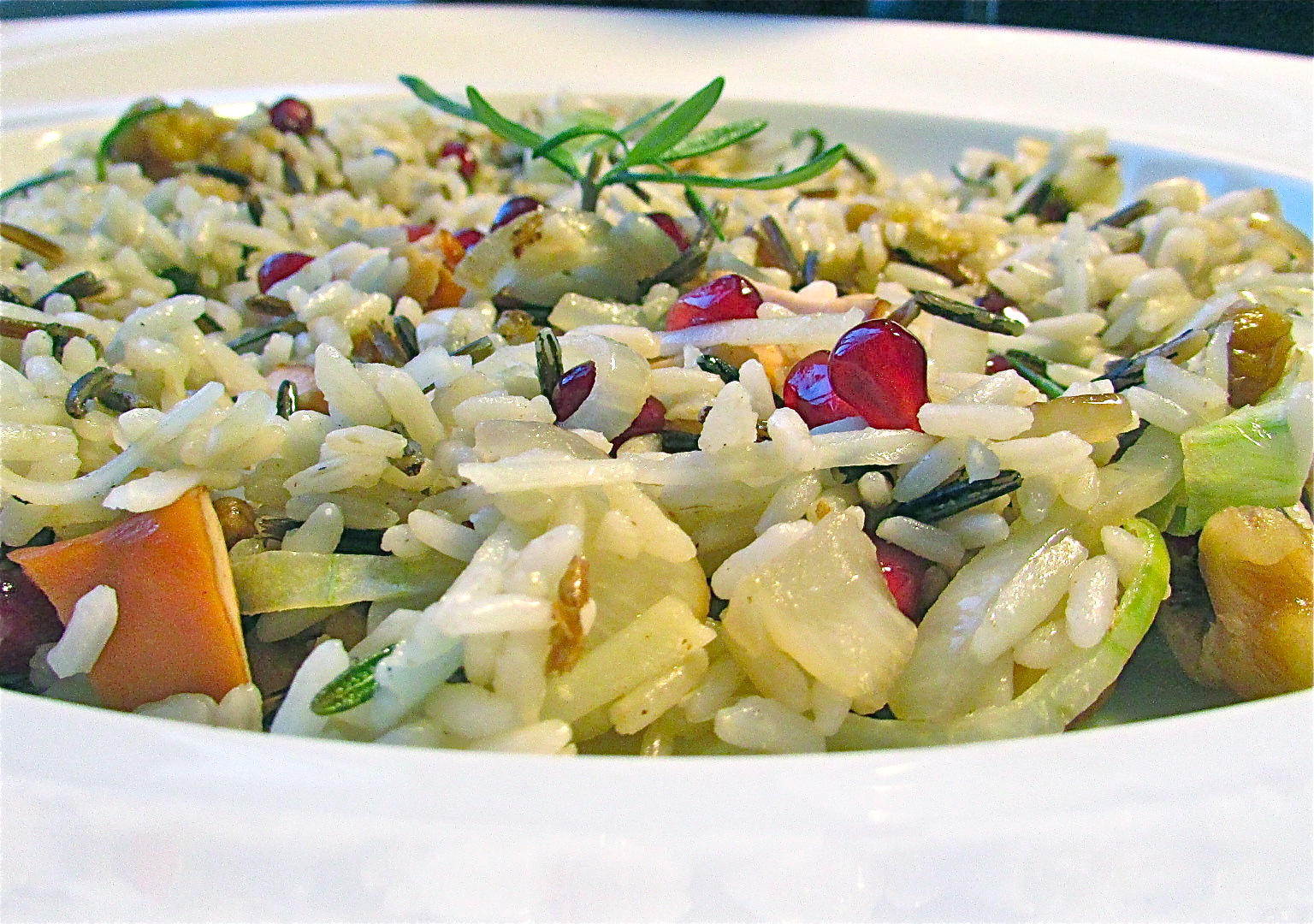
Sometimes, you just know how a dish is supposed to be put together and you nail it the first time.  That might have happened this evening – though I can’t rule out the possibility that smoked chicken would make day-old porridge into a culinary delight as well.

Either way, this is a pleasing, colourful dish wish lots of texture and a nice balance of flavours.  I’ll definitely be making it again.

IngredientsIMG_0433

1 breast smoked chicken, cut into cubes

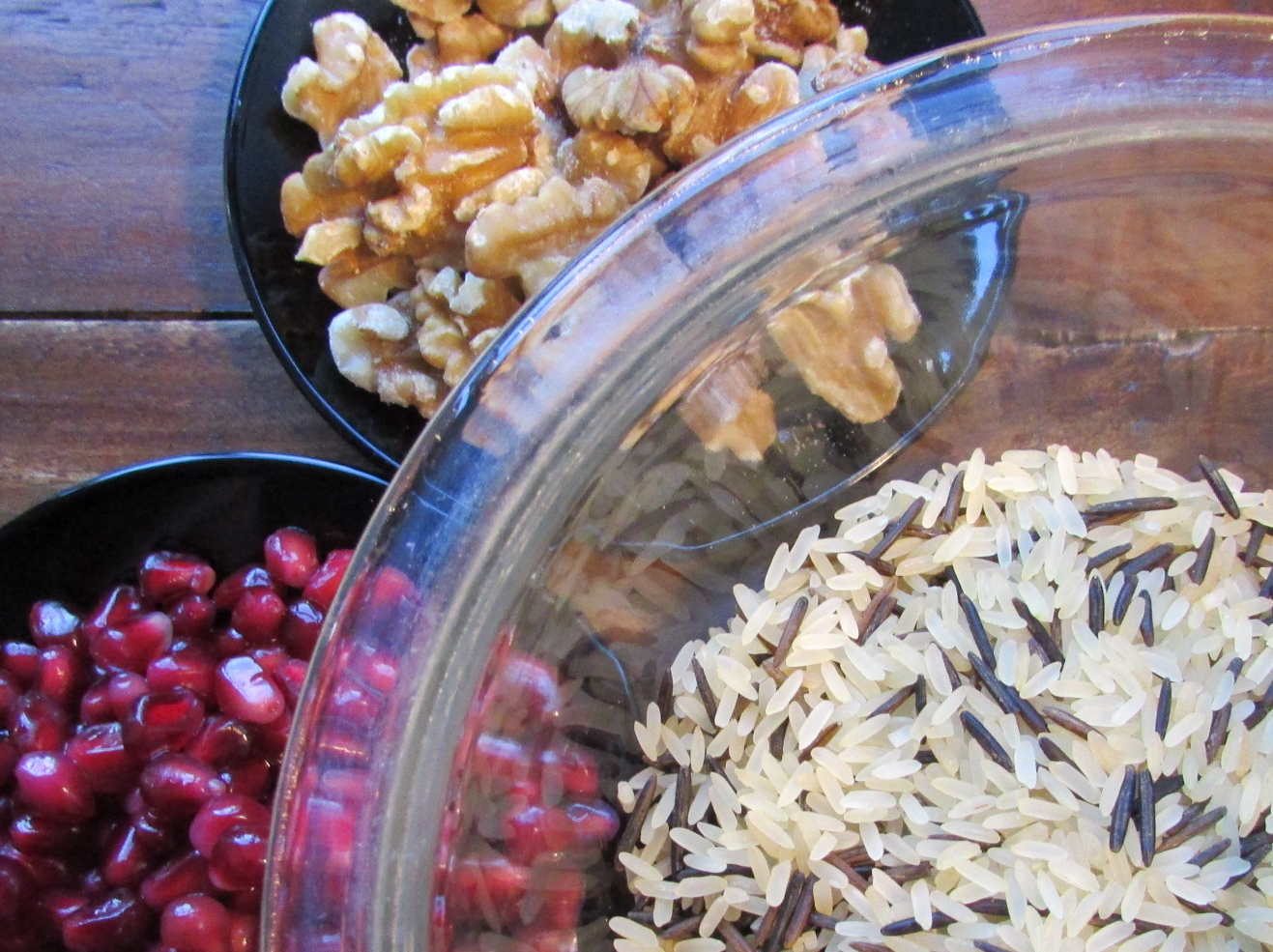
180g wild rice

2 small onions/1 large onion, sliced

2 sprigs rosemaryIMG_0437

100g walnuts, broken into pieces

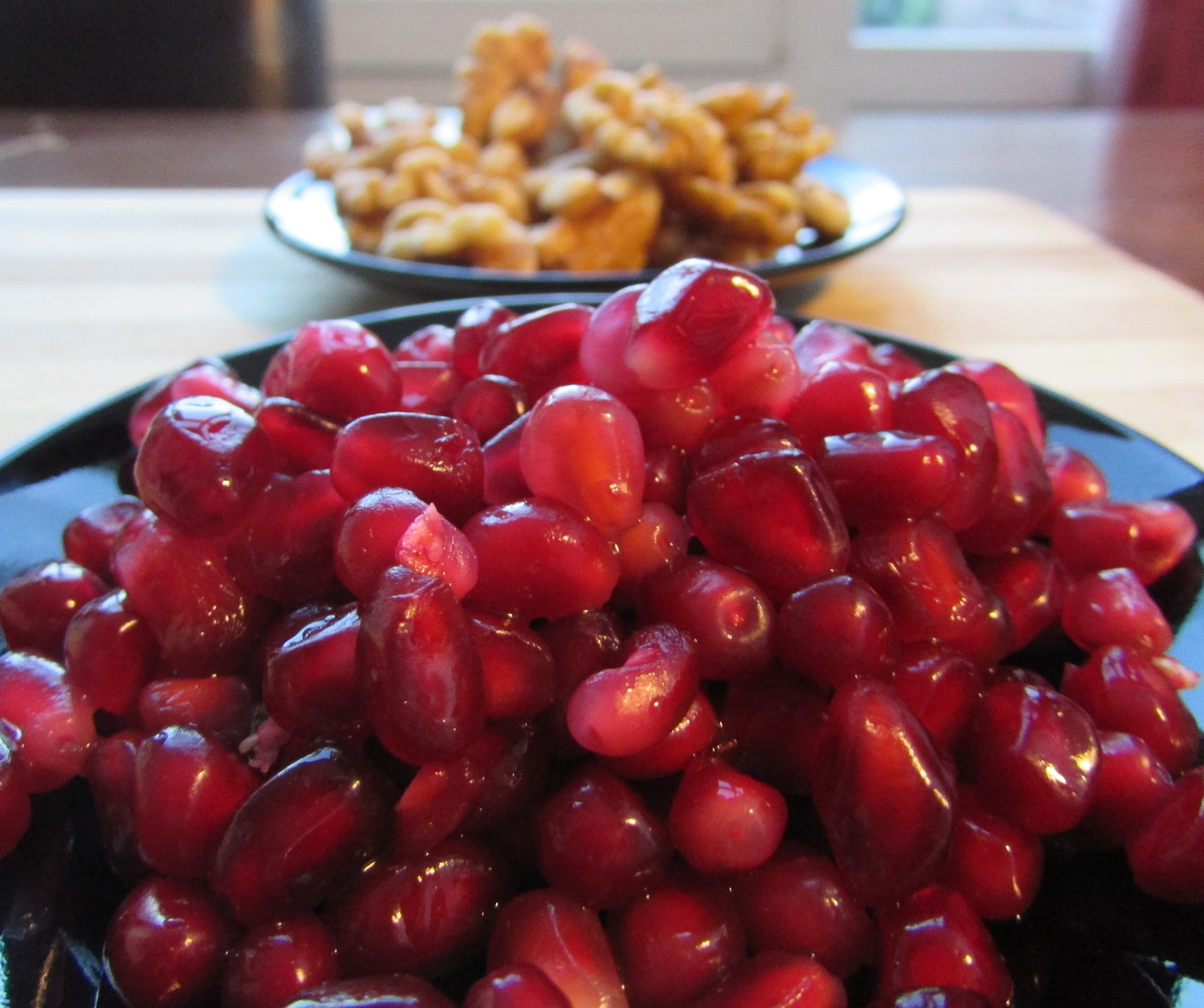
80g pomegranate seeds

50g pecorino romano, grated

olive oil

Serves 3

Method

Step 1: rinse rice and cook with about 350ml on a medium to low heat.  Bring through the boil, allow it to simmer for 3-5 minutes and turn off.  Set aside to let it steam through to completion.

Step 2: in a large frying pan or wok, over a low to medium heat, fry onion, walnuts and rosemary leaves, stripped from their stalks.

Step 3: once the onion is starting to soften, add the chicken and stir for another 3-4 minutes until the chicken is warmed through.  Turn off the heat, add the pecorino and pomegranate seeds and stir through.  Set aside until the rice is done.

Step 4: Once the rice is done, add it to the rest of the ingredients and stir gently, but thoroughly.  You don’t want to break the structure of any of your ingredients.

And there it is: a relatively quick and extremely more-ish dinner.

IMG_0426

Roast Jerk Chicken

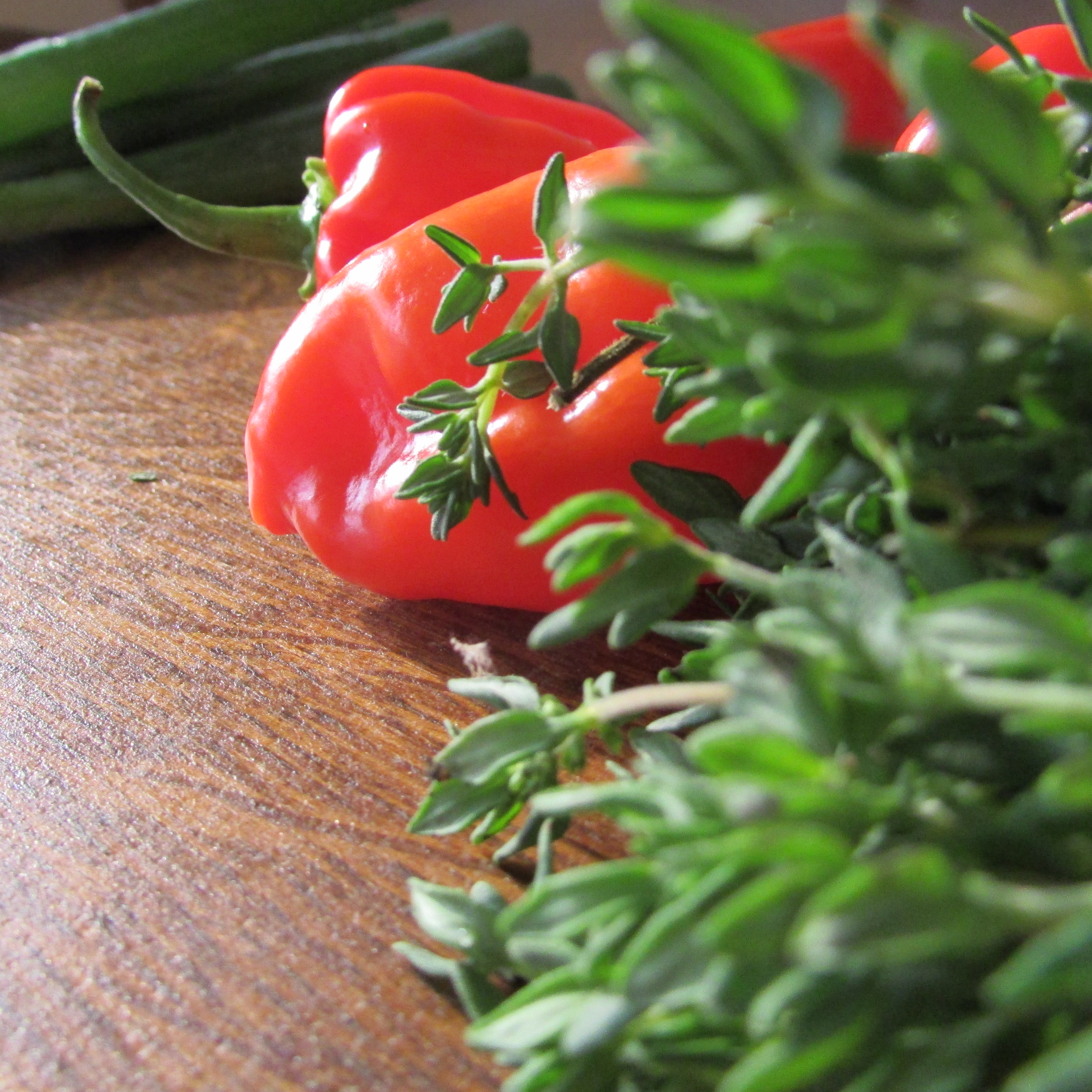
4. peppersScotch bonnet peppers: my favourite.  When I saw them in the market in The Hague last Saturday I beelined straight for them.  I think they’re what I miss most about London.  Um.  Apart from Aidan.

The marinade is very easy – at least the way I make it anyway – and it’s so good. Even though I’ve only been making it since I moved to London, jerk chicken and gravy is right up there in terms of all-time favourite comfort foods.

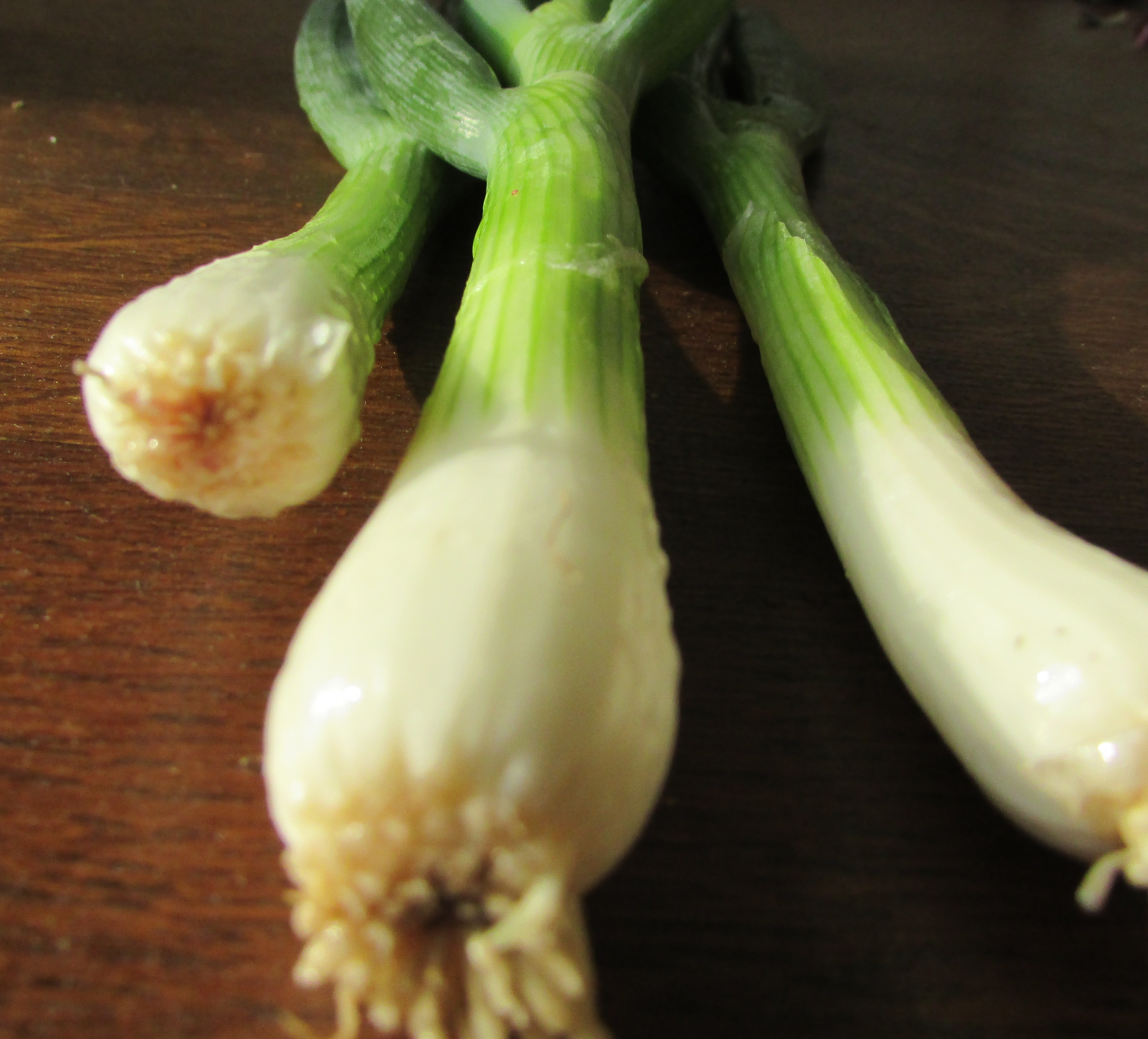
Ingredients3. Spring onions

Chicken

1 free range chicken

3 scotch bonnet peppers

3 spring onions

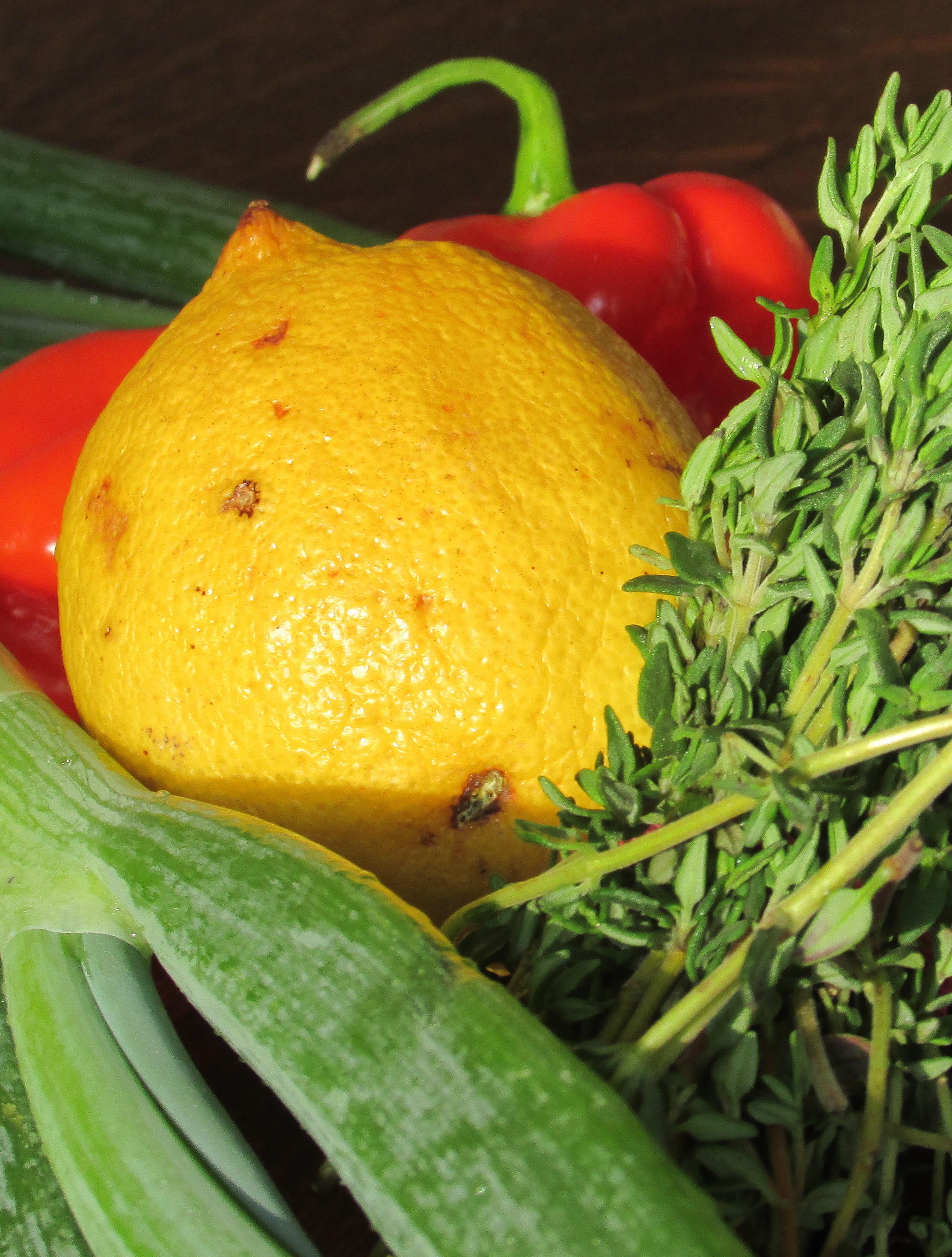
3 tbsp sunflower oil5. Lemon

5-6 sprigs of thyme 

juice of 1 lemon

generous pinch of salt

Gravy

1 chicken stock cube

1/2 inch minced/grated ginger2. Thyme and pepper

pinch allspice (or cloves, if easier to come by)

300 mls water

1 tbsp cornflour

meat juices 

Method

Chicken

Step 1Throw peppers, onions, oil, thyme, lemon juice and salt into a blender and blend.

Step 2: Smother the chicken with the paste and leave overnight in the fridge.

Step 3Transfer to roasting tin and roast in a preheated oven at 200c for about 1hr 30m – 1hr 45m, depending on weight of chicken.  This is a slightly higher temperature than most will recommend but I find it works.  Trial and error, and all that.

Step 4: When done, remove from roasting tin, wrap in tinfoil, drape with tea towel and leave to rest.

Gravy

Step 1Pour some boiling water into the roasting tin and stir/scrape the bottom of the pan with a fish slice to get all the good stuff off the bottom.  You know what to do.

Step 2: Fry ginger and allspice in a little oil on a medium to low heat for 1-2 minutes.

Step 3: Add water and stock cube, turn up heat and stir until stock cube is dissolved.

Step 4: Mix cornflour with half glass of cold water until dissolved.  Add to saucepan and stir well.

Step 5:  Add meat juices from roasting tin to the saucepan and continue to heat.  Bring through the boil, stirring continuously, until the gravy thickens.

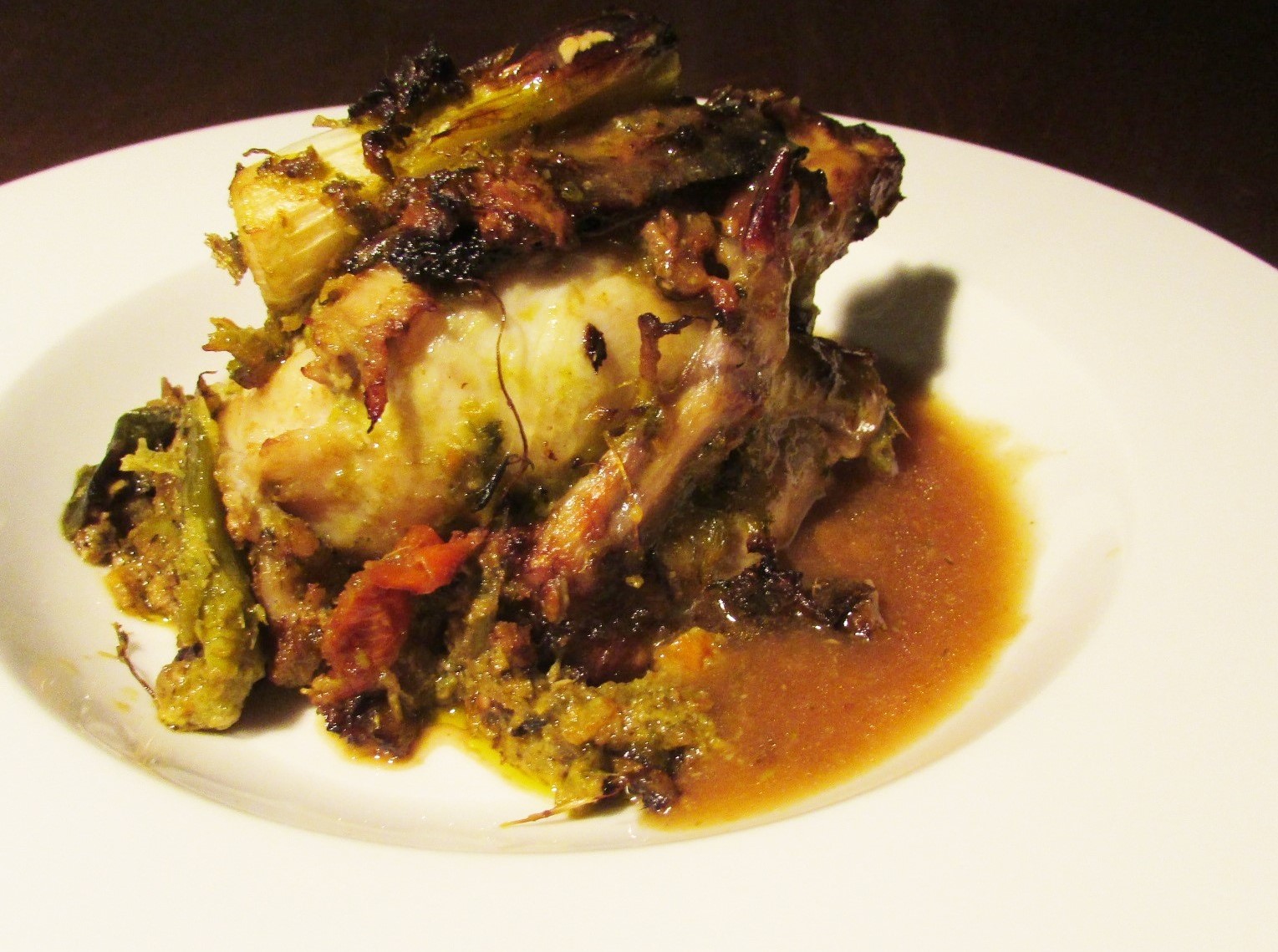
Plate up chicken, one quarter per person, and drench with gravy.  Serve with rice and peas and a side of spiced carrot and cabbage (recipes forthcoming!).

1. Finished product v2

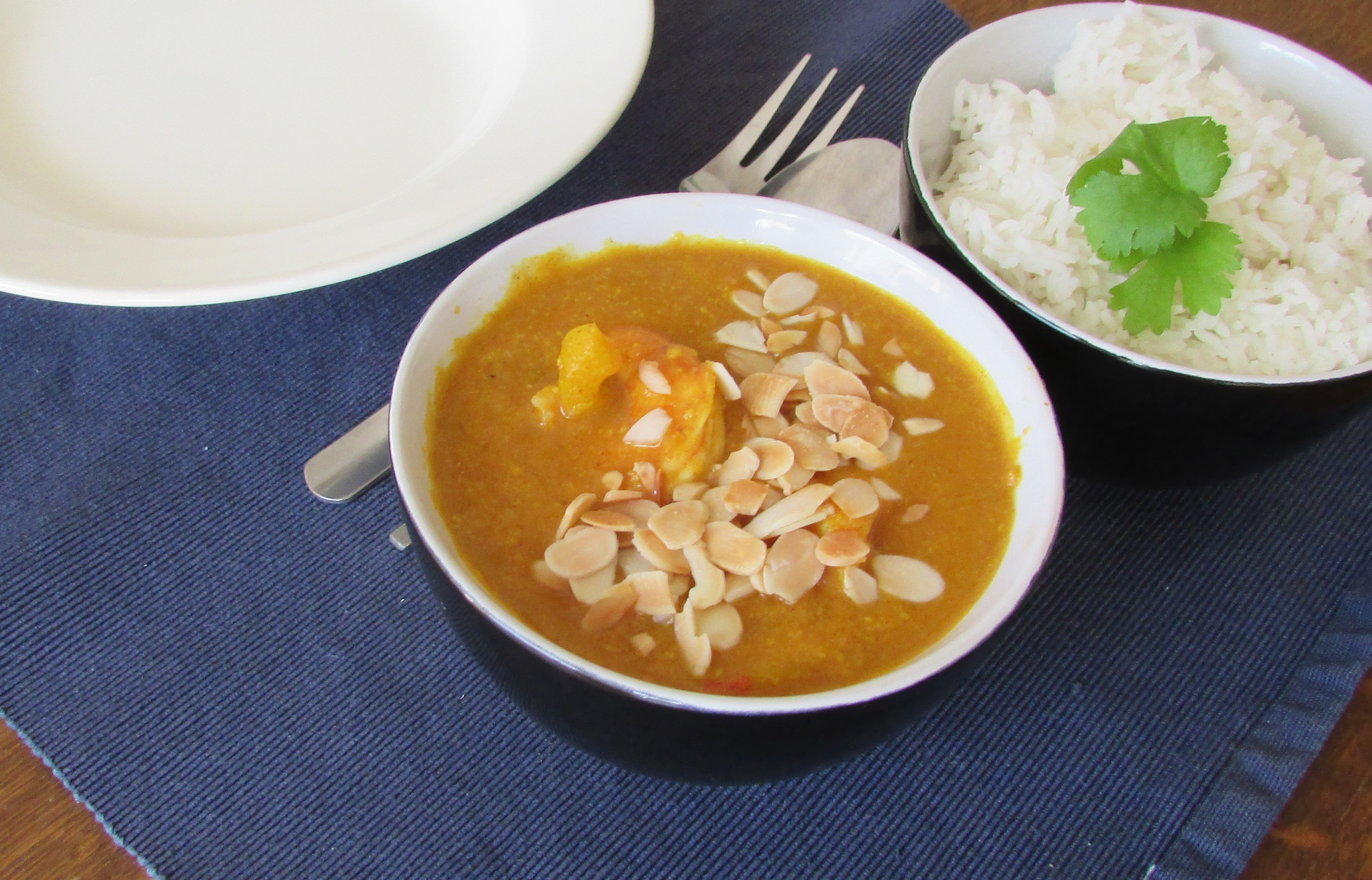
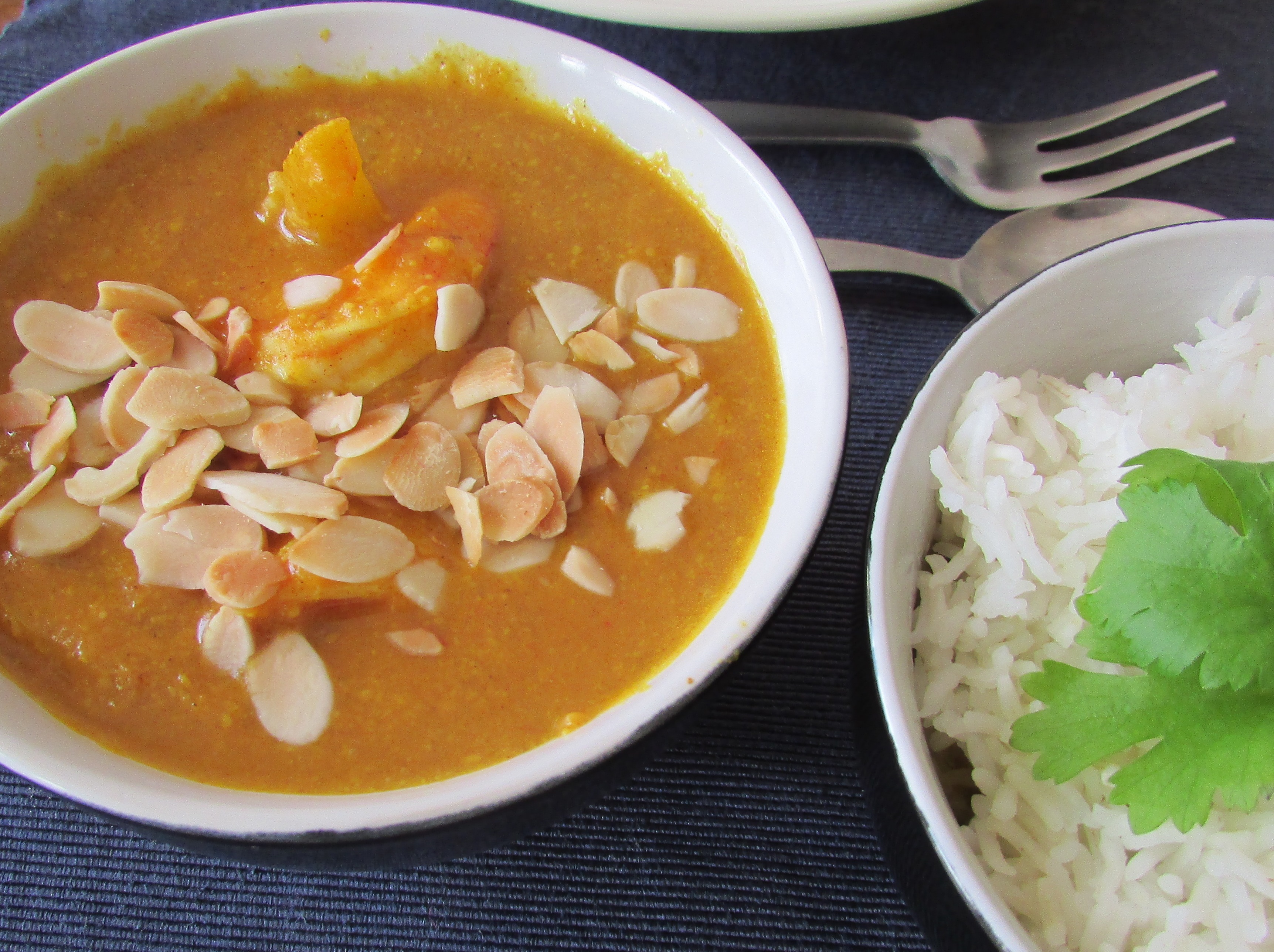
Prawn and mango curry

4. Finished productThe Indian takeaway next to our flat in Herne Hill does amazing Butter Chicken and Prawn Naga.  (Side note: I’m pretty sure the Naga is actually made with scotch bonnet peppers – but I am a big scotch bonnet fan so I’m more than happy with that.) 

This curry has elements of both dishes – the sweet, cinnamon-y taste of the Butter Chicken and the heat and protein from the Naga dish.  It might look a wee bit complicated at first glance but this is a genuinely easy – and very tasty – curry.

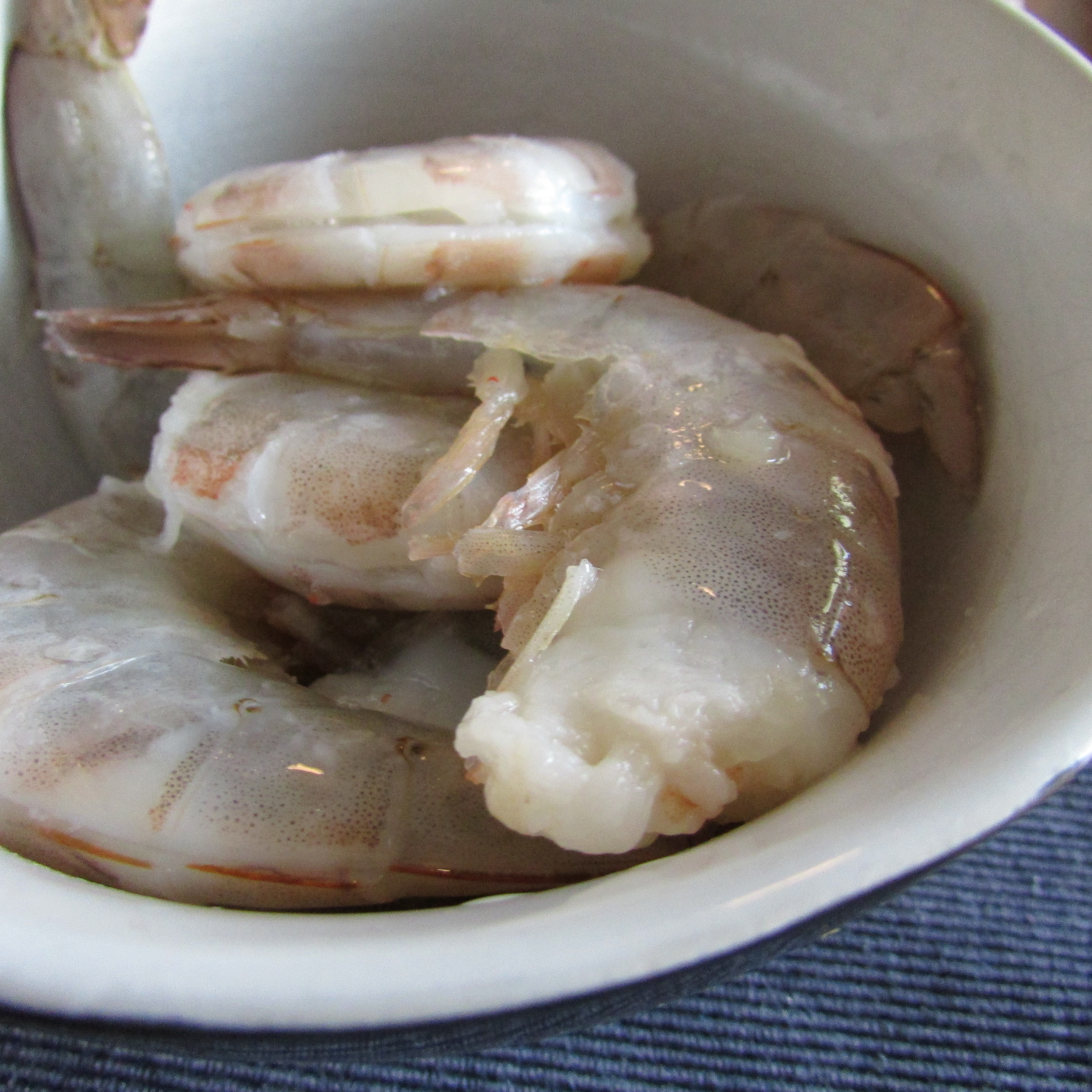
Ingredients2. Prawns

300g prawns

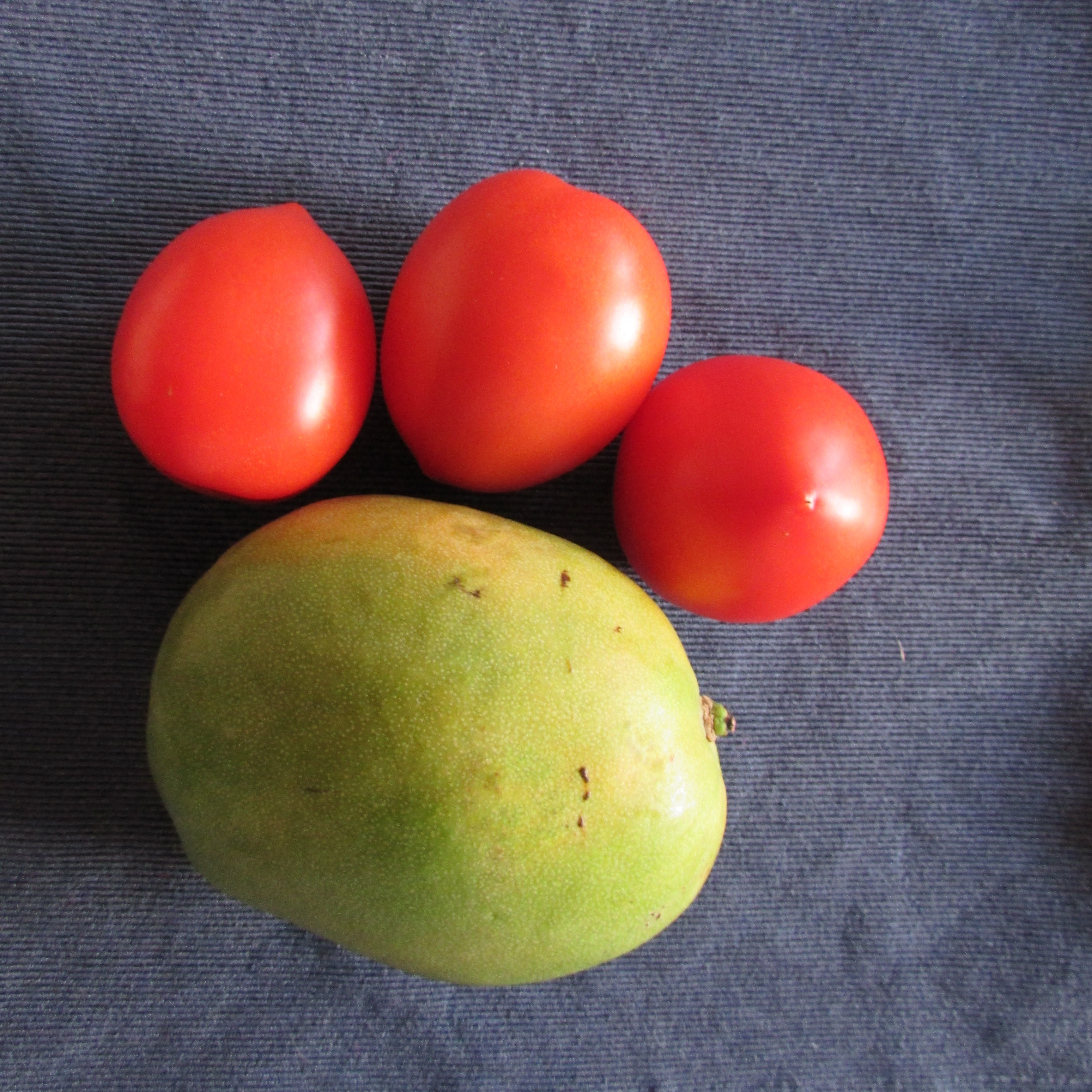
1 mango, peeled and chunked

3 tomatoes, skins removed

3 potatoes, peeled and sliced

1 yellow pepper, sliced

1 onion, sliced  1. Mango and tomatoes

3 cloves garlic, minced

1/2 square inch ginger, minced

1 hot pepper (naga, scotch bonnet or your own personal favourite) minced

1 tbsp each of curry powder and cinnamon

1 tsp turmeric3. Onions etc

50g ground almond

500ml water

1 tbsp honey

1 knob butter

Salt, to taste

Handful of flaked almonds, toasted, to serve

Method

Step 1Fry onion, garlic, ginger, pepper and spices in butter on a low heat for about 2-3 minutes.  Careful with the pepper — too high a heat and it may induce a coughing attack!

Step 2Add the potato chunks and continue frying for another 2-3 minutes.

Step 3: Remove skins from tomatoes by slitting their skin with a sharp knife and dunking in a pot of boiling water for a minute or two.  Take them out and the skin should slip right off.  Place the tomatoes and mango chunks in a pot, bowl or food processor and blend until smooth.  Add this mixture to the potatoes and spices and allow to simmer for about 20 minutes on a medium-low heat.

Step 4: Stir in ground almond, cover and allow to simmer for another 5 minutes or so.

Step 5: Add yellow bell pepper and simmer for another 3 minutes or so.

Step 6: At this point you might want to taste it to see how much salt it needs.  I usually add a tbsp of honey as well, to sweeten it up, and have even been known to add bicarbonate of soda when I discovered that the mango I had used was particularly sour.  The bicarb will bring down the acidity like magic – but be really, really careful about how much you add because if you put in too much it will taste soapy and salty.  If that does happen, you can always increase the quantities of everything else to bring it back into harmony – but that’s a pain, so just be careful!

Step 6: Finally, add the prawns, which should be peeled and decapitated.  (Yup.  I’m keeping it.)  It’s best to get fresh prawns from a fishmongers.  If you can’t do that, however, I recommend raw and frozen. Cooked – whether frozen or not – are gross and fishy tasting.  Really unpleasant and only to be used if you really can’t find anything else.

You can pretty much turn off the heat as soon as the prawns go in because they need very little cooking – but if that freaks you out then by all means, keep cooking for another couple of minutes.

Step 7: Sprinkle with toasted, flaked almonds and serve!

4. Finished product 2

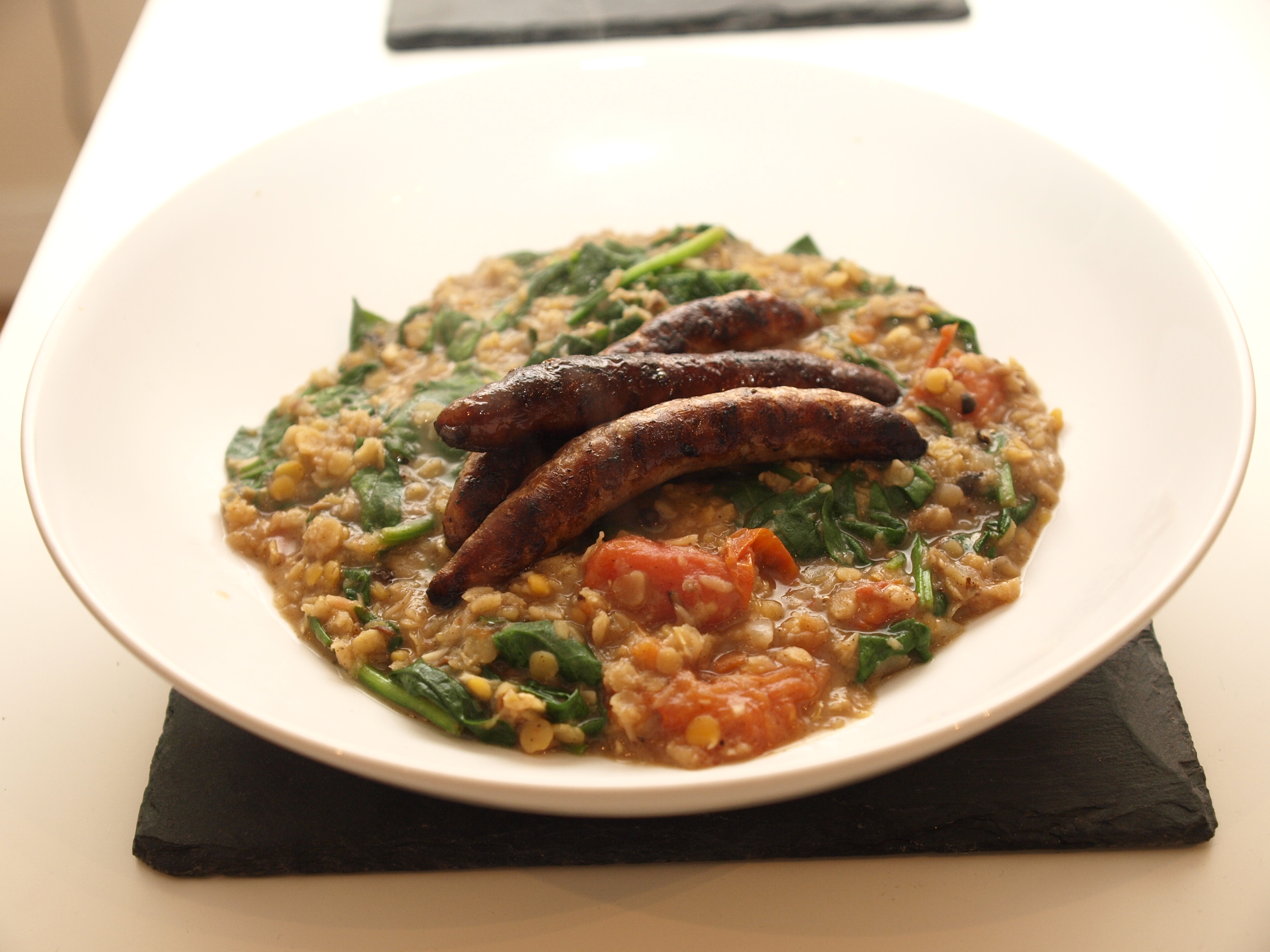
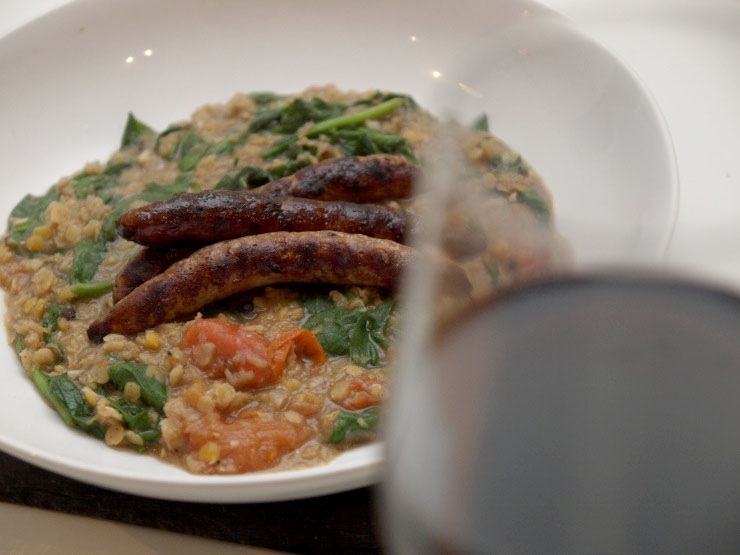
Chipolata sausages and lentils

OLYMPUS DIGITAL CAMERA

The inspiration for this dish came to me yesterday, while staring blankly at the meat section in Sainsbury’s, wondering – as usual – what the f*ck to cook for dinner. Having just finished my “long run” outside Sainsbury’s doors (good timing or what?!) I could barely think straight, let alone face into hours of laborious food prep.

This is my take on what has become a well-known dish in recent years.  It’s great winter food and quite impressive, particularly given its simplicity.  If you have a good stock of herbs and spices you can get quite creative but for my version I’ve stuck closely to the seasoning used in the sausages, amplifying or complementing flavours already present in the dish.  It’s super tasty, nutritious and quick – you should be able to get it on the table in 30 minutes.   For real.

Ingredients

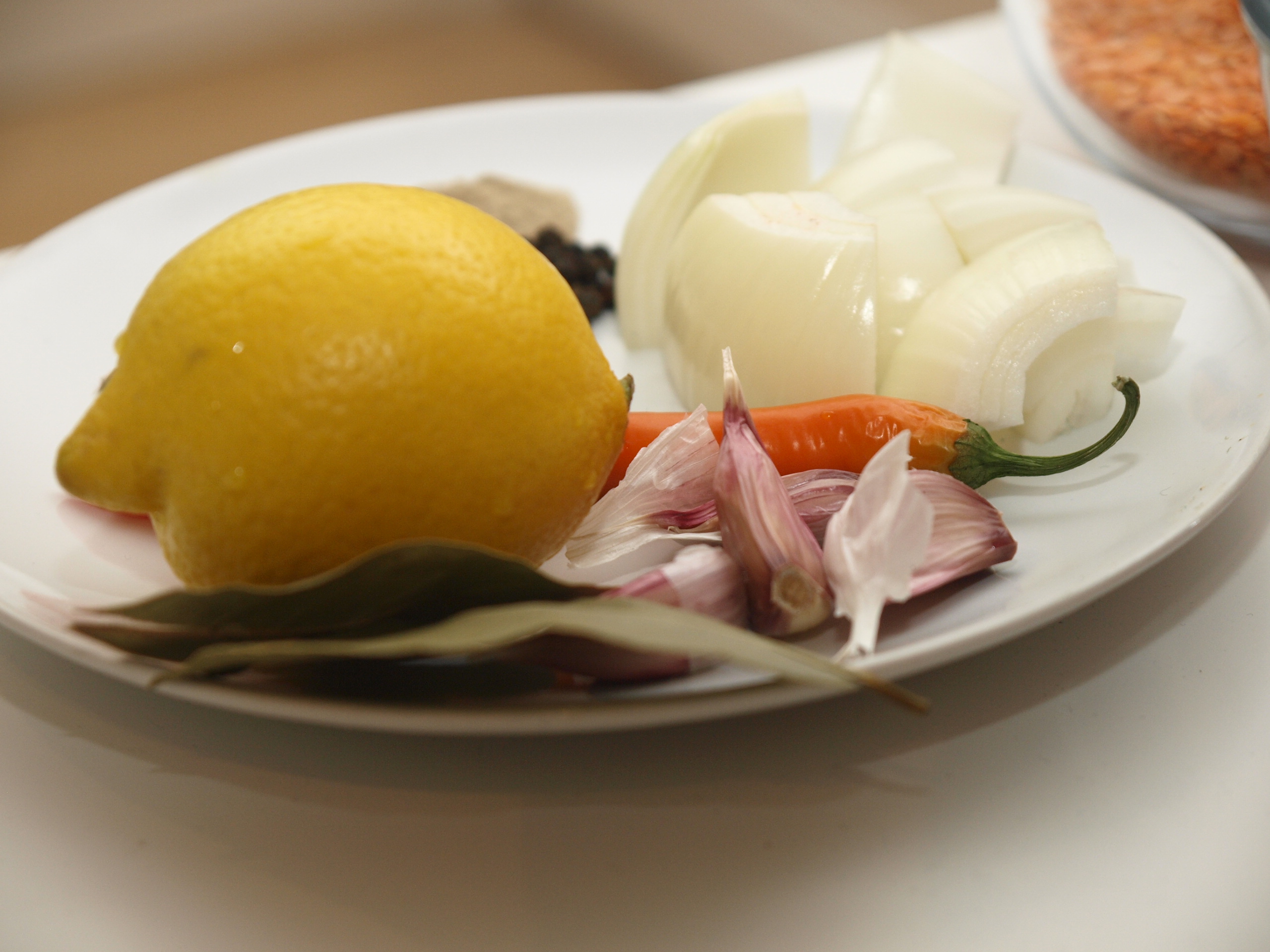
375g chipolata sausages (12)          OLYMPUS DIGITAL CAMERA

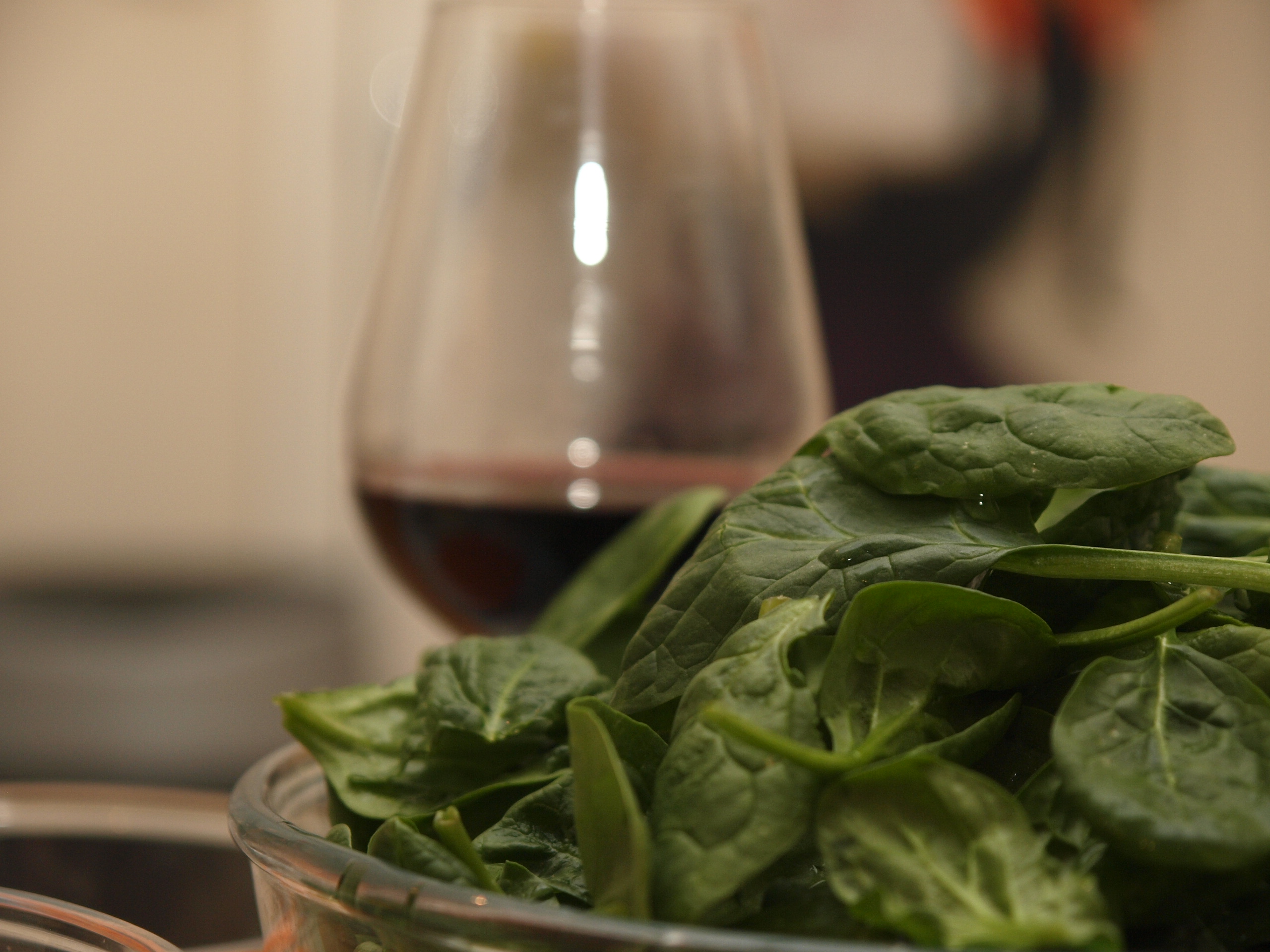
250g spinach

200g split red lentils

150g cherry tomatoes

1 onion, minced

4 cloves garlic, minced

1 chili pepper, minced (optional)

1 tsp  black pepperOLYMPUS DIGITAL CAMERA

1 tsp white pepper 

1 tsp cumin seeds

1 tsp nutmeg

3 bay leaves

salt to taste

juice 1/2 lemon

1/2 glass wine

Serves 4

Method

Step 1: in a large pan, warm the dry spices in a little olive oil on a medium-low heat for about 1 minute.  Add the minced garlic, onion and (optional) chilli.  Fry for a further 3 minutes.

(As an aside, I cook with chilli a lot – but sometimes I’ll use peppers, or even chili flakes, that go straight for the back of my throat, and have me coughing up a lung for 20 minutes.  I tend to just struggle through (good for the sinuses and all that), but I’m told that a damp bandana tied over your mouth and nose should help. Just don’t suffocate yourself, please.)

Step 2: add split red lentils, cherry tomatoes, bay leaves, lemon juice, a pinch of salt and about 400-500mls of water.  Cover and leave to simmer on a low heat for 12-15 minutes.

Step 3: meanwhile, place chipolatas under a hot grill, turning occasionally to make sure they are good and browned all the way round.  This should take about 10 minutes. Once cooked, turn on oven at about 160c to keep them warm while waiting for the rest of the dish to be ready.

Step 4: add wine to lentils and stir through.

Step 5: turn up heat to medium-high and add spinach. Toss the spinach to make sure that some of the lentils are on top as this will help it wilt faster.   You want to remove from heat as soon as the spinach has wilted as it’s much nicer with a bit of bite left in it.  This should take about 2-3 minutes.  Check seasoning to make sure it’s to your taste – but otherwise, you’re done.  Serve with red wine, obviously.

image

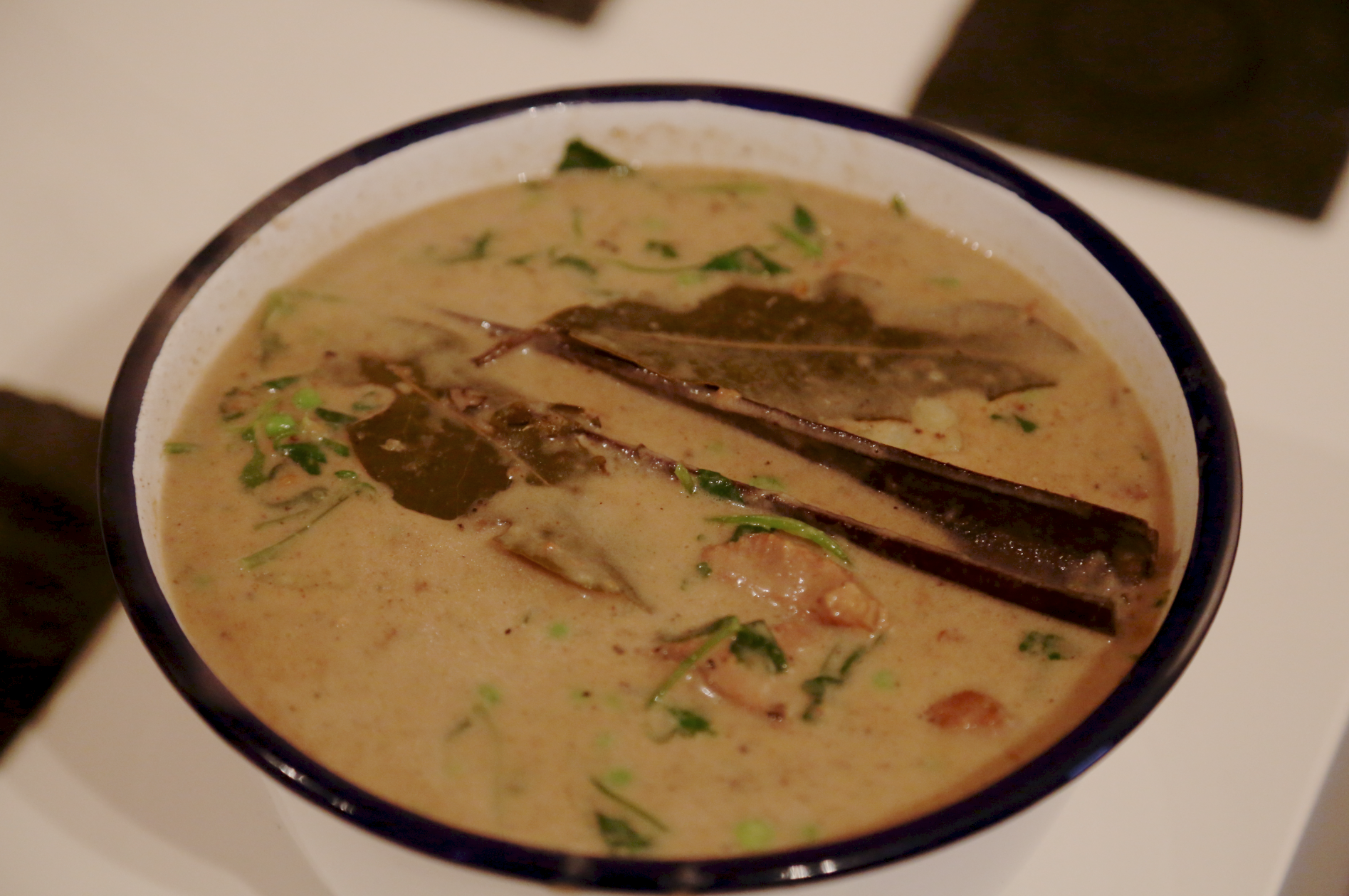
Coconut curry goat


Screen Shot 2014-11-09 at 22.24.43

I am sorry goats, but you are tasty.  Especially when stewed for 3 hours with a variety of soft spices and stock and some coconut milk thrown in at the end.  You taste even better the next day.

We live near Brixton.  And while Brixton is, in many ways, the new Clapham, it has one very good thing going for it: the market, where you can get almost any spice you can think of and all sorts of weird cuts of meat, internal organs and, most importantly, goat.  At least, they call it goat…

Anyway.  This is a lovely, fragrant curry which will fill the house with delicious smells and chase away the Sunday blues.  Because when else are you going to have the time to cook a 3 hour curry?

Ingredients

2 cloves grated garlic

1 tbsp grated ginger

olive oil 

flour

salt

pepper

500g boneless goat meat

1 cinnamon stick 

2 bay leaves

1 star anise

1 tbsp coriander seeds

1/2 tsp ground clove

1-2 tbsp ground cumin

1 1/2 pints stock 

4 potatoes, chunked

1 tin coconut milk

150g frozen peas

1 handful of fresh coriander, roughly chopped

Serves 4

Screen Shot 2014-11-09 at 22.21.15

Method

Step 1: mix flour, salt and pepper in a bowl. Cut meat into bite sized chunks and toss in the flour until completely covered.

Step 2: warm grated ginger and garlic in some olive oil on a low heat.  Turn up heat and add floured meat and fry until sealed.  Turn off heat and set aside.

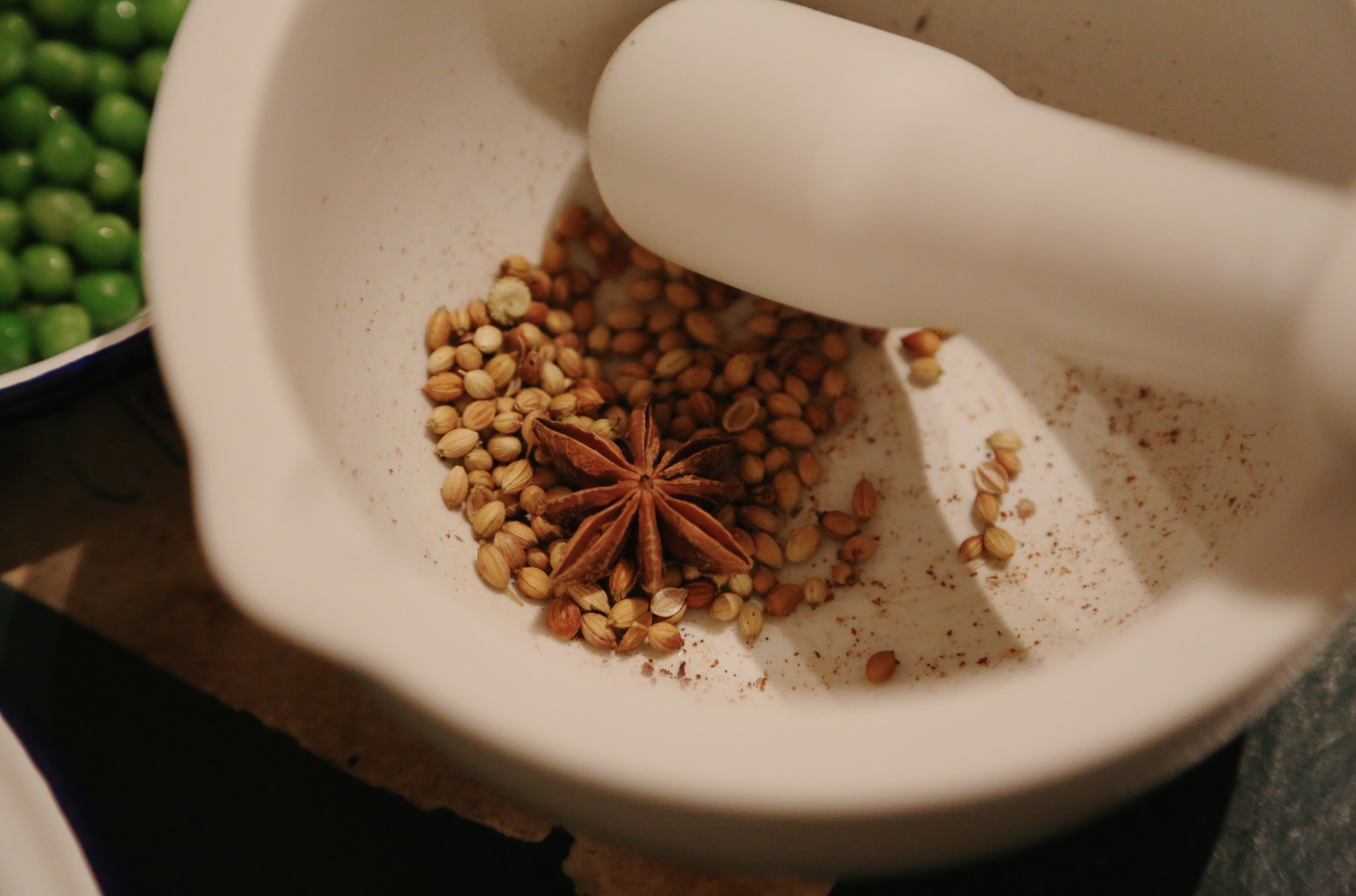
Step 3: if any of your spices are in whole form (for instance, I keep whole star anise and coriander seeds), grind them with mortar and pestle for as long as your patience will hold out.  If you are like me, that’s not very long – so then grind them some more.  Add coriander seeds, star anise, cumin, and cloves to meat and stir through.

Step 4: add stock, cinnamon stick and bay leaves to the pot and return to the stove on a medium-low heat.  Put lid on and leave to simmer for 2 hours, stirring occasionally.   It’s fine to let the liquid reduce a bit, but if it looks like it’s drying out, add a splash of water.

Step 5: add the peeled, cubed potatoes to the pot and make sure everything is just about covered with water (add a splash or two more if necessary).  Simmer for 45 mins – 1 hour.

Step 6: stir through coconut milk and bring back to simmer.

Step 7: add frozen peas.  Keep on heat for about 1-2 minutes to make sure the peas are hot – but no more than this.  Remove from heat and stir through coriander.  Transfer to serving bowl (if you fancy being fancy) – et voila, you are done!

A good, flavoursome Sunday evening meal and an even better Monday packed lunch.

Screen Shot 2014-11-09 at 22.22.43

Bobotie

bobotie landscape 2

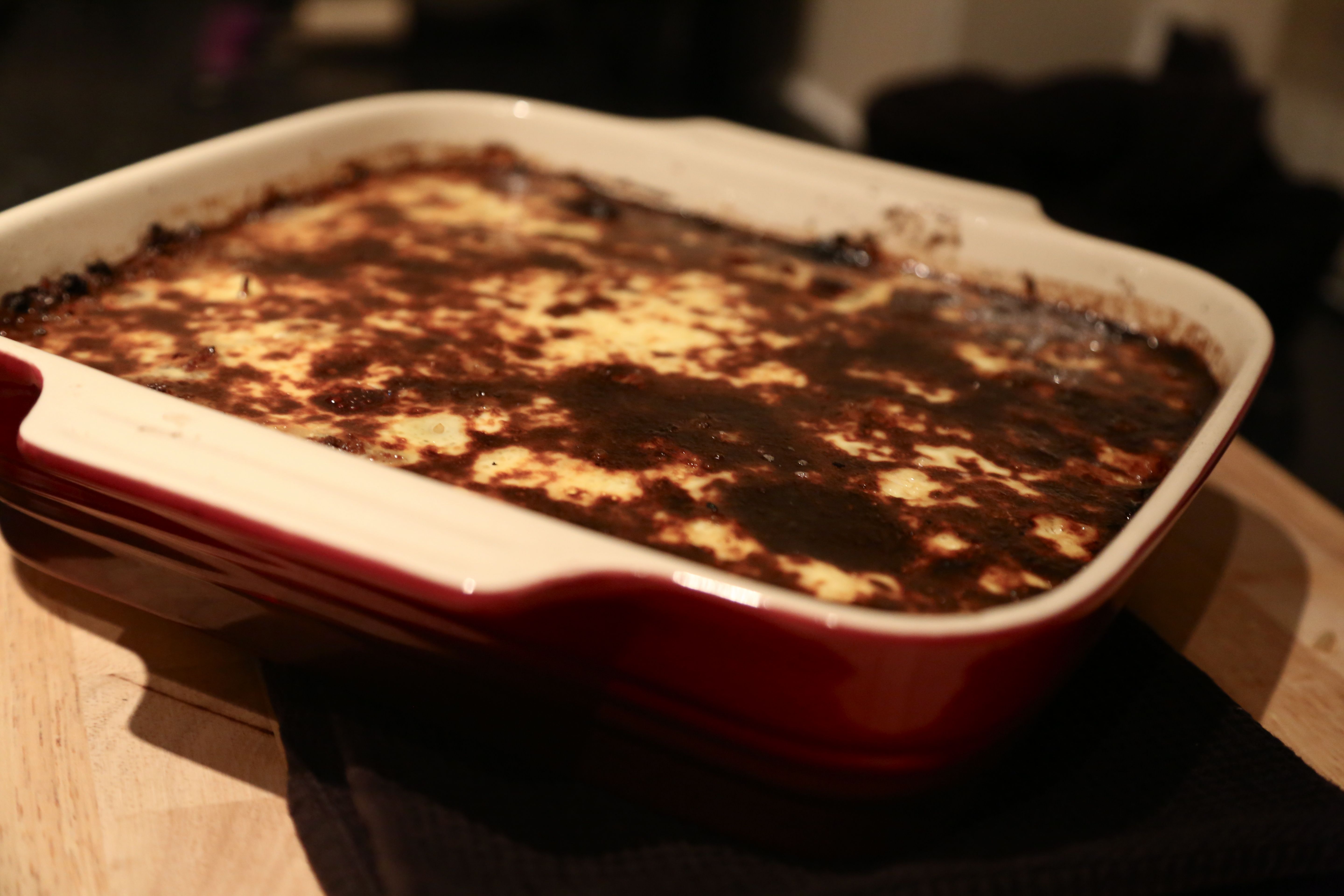
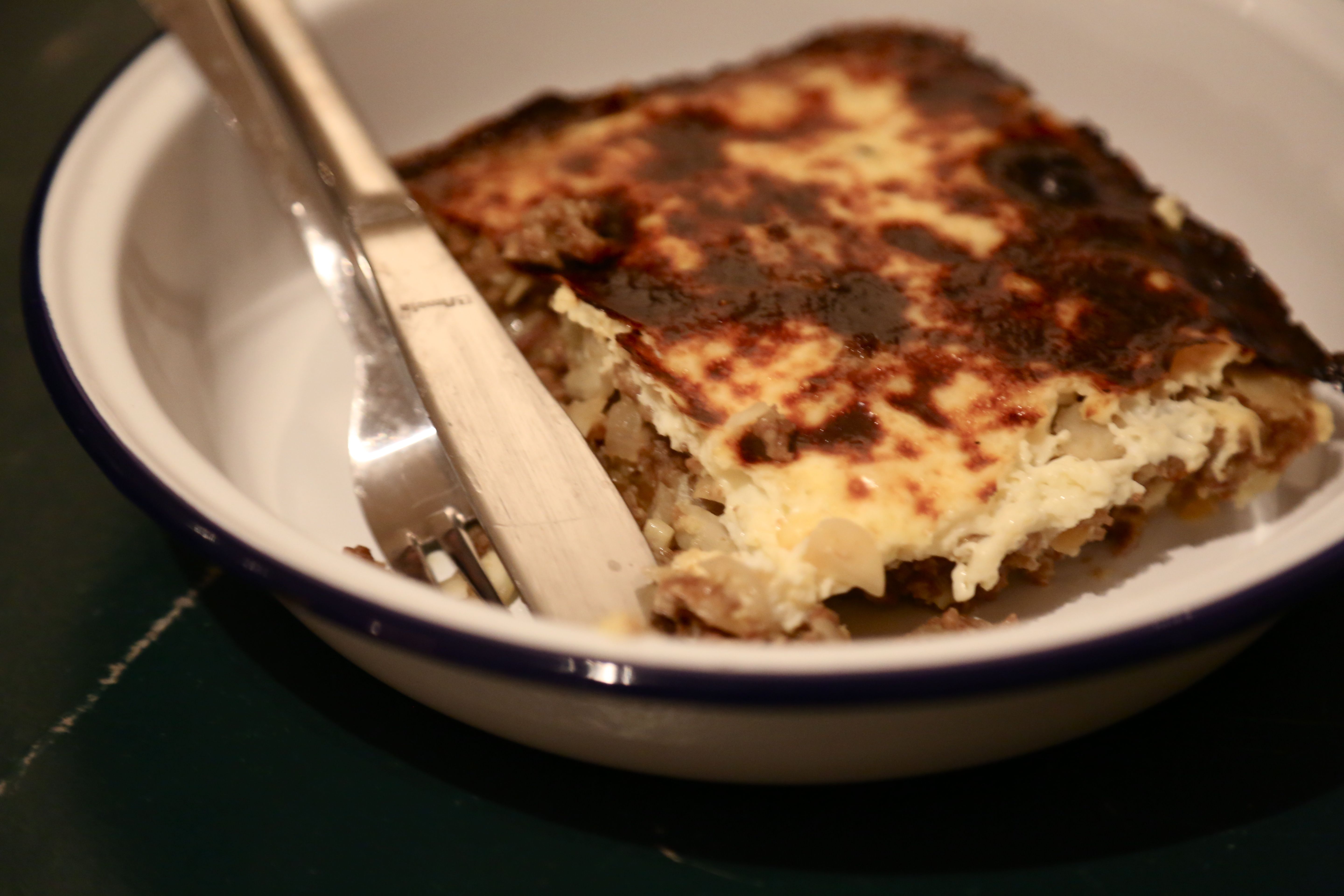
Referred to as South Africa’s unofficial national dish, Bobotie is a shockingly tasty pie-like concoction of mince, fruit, nuts, and a custard topping.  Nigella even puts bloody jam in it!

Now, if Nigella and Joey Tribbiani both think that custard, jam and meat is a winning combination, I guess I shouldn’t knock it ’til I’ve tried it.  But my version – courtesy of Lannice Snyman (with a tweak or two) – features mere dried apricots and apples.

And it goes a little something like this:

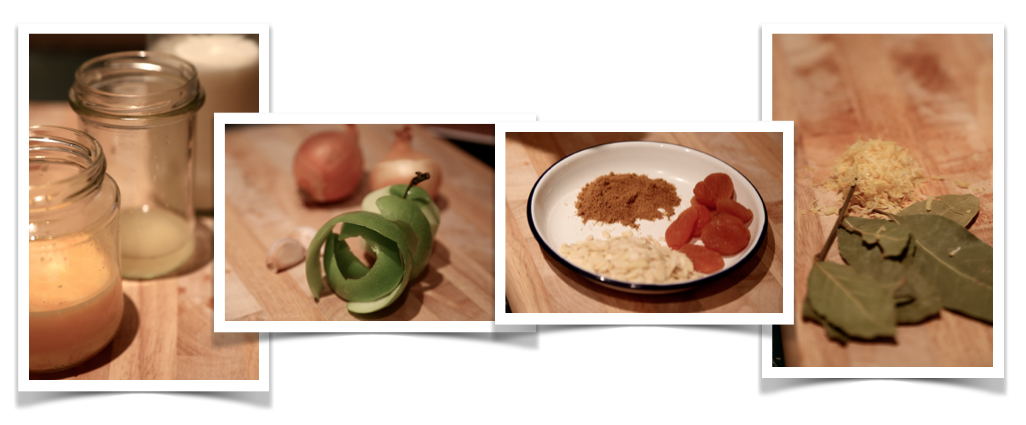
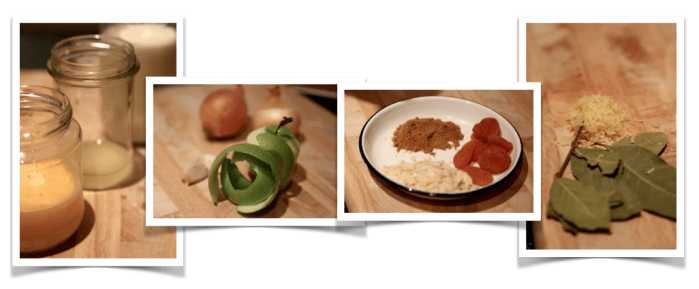
Ingredients

vegetable oil 

2 onions, finely chopped

600g minced lamb

2 garlic cloves, crushed or finely chopped

10g hot curry powder

2 slices bread, crumbed 

1 lemon, juiced and zested

3 eggs

300ml milk

40g flaked almonds

1 granny smith, peeled, cored and finely chopped

60g dried apricots, chopped

5 bay leaves

Serves 4Screen Shot 2014-11-03 at 22.22.59
Method

Before we get started, it might be helpful to note that there are 3 stages here.  There’s the onion, garlic, meat and curry powder stage; there’s the milk, egg, breadcrumbs, fruit and nut stage, and then there is the custard stage.  So, don’t worry about getting everything ready beforehand as you can do it in between stages.

Step 1: Turn on your oven to 160 c.  Grease your tray with butter or oil.  Butter is probably better but whatever you have to hand works.

Step 2: Fry your chopped onions on a low heat until they are golden brown but not burnt.  Add your meat, and prod with wooden spoon until it’s all sealed.  Lannice says you can use beef or lamb. I used lamb and after tasting how well it worked with the other ingredients, I can’t imagine that beef would work as well. So, use lamb.

Step 3: Add your garlic and curry powder to the meat.  Cook all this up on a low heat for about 30 minutes.  Remember, mince tends to be pretty low grade fare, so the longer the better.

A note on the spices used here:  I used Rajah hot curry powder, which contains coriander, turmeric, mustard, bengal gram, cumin, chilli, fenugreek, pepper, garlic, salt, fennel, poppy seeds and curry leaf, apparently.  Lannice provides a recipe for a roasted masala to go with this recipe which contains coriander seeds, turmeric, cumin, chilli, cinnamon, cloves, cardamom, pepper, and ginger.  Not much overlap.   So, I think it’s probably up to you to experiment a bit to get it to your taste – just make sure you get some salt and cumin in there for flavour, and pepper and chilli for a bit of warmth.

Step 4: Combine your breadcrumbs, fruit, nuts, lemon juice and zest, 50mls of your milk and 1 of your eggs (the rest of your milk and eggs are for the custard).  Fold this into your mince and make sure it’s all mixed up well.   This mixture goes into your tray and gets patted down flat with a big spoon.

Step 5: Roll up your bay leaves and bury them in the bobotie mixture.  I can’t figure out why Lannice wants them rolled up but it made them a bit easier to pick out afterwards so I’m keeping this step in.

Afterwards, cover your tray with foil and pop it in the oven for 30 mins.

Step 6: Take out your tray, remove your foil and turn up the oven to 200 c in preparation for the next step.

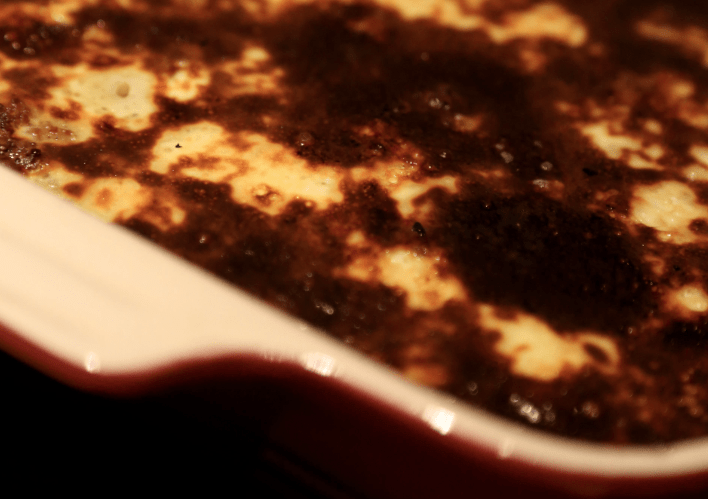
Step 7: Mix together your 2 remaining eggs with your remaining milk and add a good pinch of salt to make a sort of savoury custard, and pour this over the top of your bobotie. Put it back in the oven at 200 c and cook for another 15-25 minutes until it’s getting omlete-like and a bit burnt on top.

Remove from oven and voila! You (should) have yourself a ridiculously tasty bobotie.  I served mine with lightly spiced rice but it’s hefty enough to eat on its own.  Enjoy!

078A4525 078A4534